
Blog of popular science about the more exiting branches of computer science.
visits
1206
votes
-1
Posted on: Jun, 9th 2013

Tim Berners Lee, inventor of the Web, from the beginning wanted that his invention was semantic forming a global data base of the human knowledge, in which the information could be consulted by all the world and understood by the machines, to generate new knowledge, answer questions and create artificial intelligences that could surpass the Turing Test. This idea begins to become true, but first have to overcome several difficulties that I'm going to expose next. Don't miss the rest of "The problems of the semantic Web"
visits
490
votes
-26
Posted on: May, 14th 2012

In an epoch in that only were a few mechanic calculators, Alan Turing, was able to define the working, the limits and the possibilities of the computers. He not only was ahead to his epoch, but also to the actual and if had not been suicided, probably he would invented something that would convert the computers in something obsolete. Learn more about "Alan Turing: Biography"
visits
371
votes
5
Posted on: Feb, 21st 2012
The previous post was about robots with body inspired by animals, so that in this I'm going to talk about robots with intelligence inspired in the nature. This are a lot of more interesting, because its programming, unlike to the robots of the prior post, is more related with the artificial intelligence than with the physics. Finish reading "Robots with intelligence inspired by animals"
visits
241
votes
10
Posted on: Sep, 3rd 2011
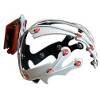
In the last years has been developed several helmets that allow read the brain, and the software responsible of make a determinate action depending on the thoughts of the user. This is, obviously, a very practical utility for a lot of people disabled and for the vaguest. Would you like to know how works this kind of technology? Continue reading "How works the user interfaces that read the mind?"
visits
1016
votes
20
Posted on: May, 29th 2011

Over two hundred years ago, in 1779, Christian Kartzenstein did 5 whistles that made blew the vowels artificially. Few years after, in 1791, Wolfgang von Kemplelen presented his "Acoustic-Mechanical Speech Machine" that we could consider the first voice synthesizer because it could produce isolated sounds and some sound combinations. Follow reading "The first voice synthesizer"
visits
753
votes
32
Posted on: May, 22nd 2011

The voice synthesizers are those programs as Loquendo, which provide of human voice to the machine. Although the majority of them have a voice very robotic, without intonation and feelings, but we can understand it. Here you see roughly how is imitated the human voice in a computer and because is so difficult achieve a voice equal to the human one. Learn more about "How works the voice synthesizers?"